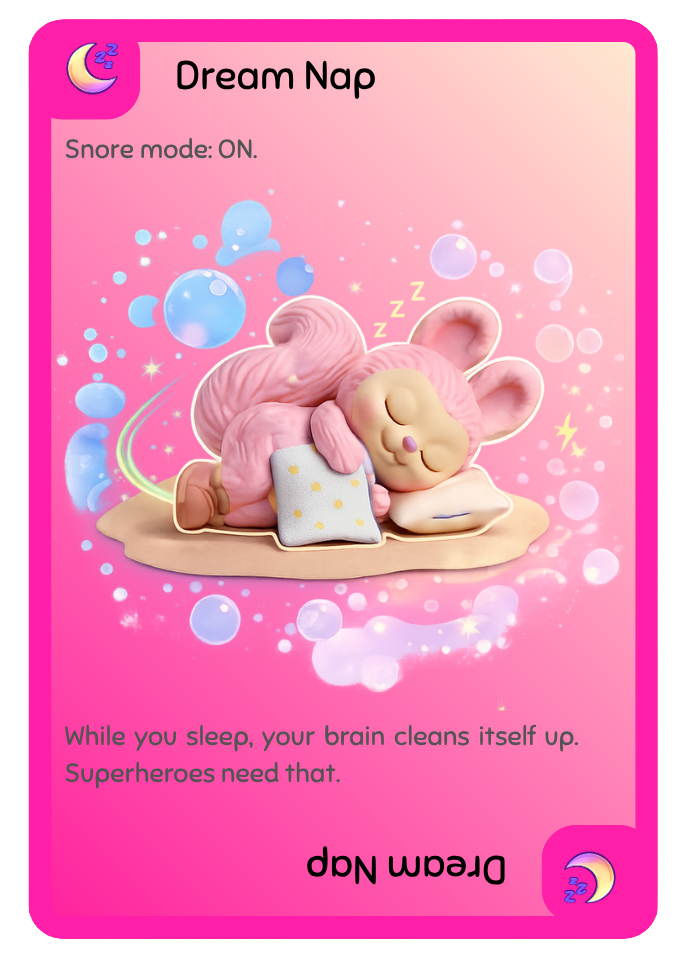
Squirrel Squad looks like 15 minutes of slap-and-shout fun. Underneath, it's built around how children actually form habits — and how they learn to think a few moves ahead.

The inside skills — naming a big feeling, calming the body, holding focus. Self-regulation is one of the earliest predictors of how a child does later, and it grows through practice, not nagging.
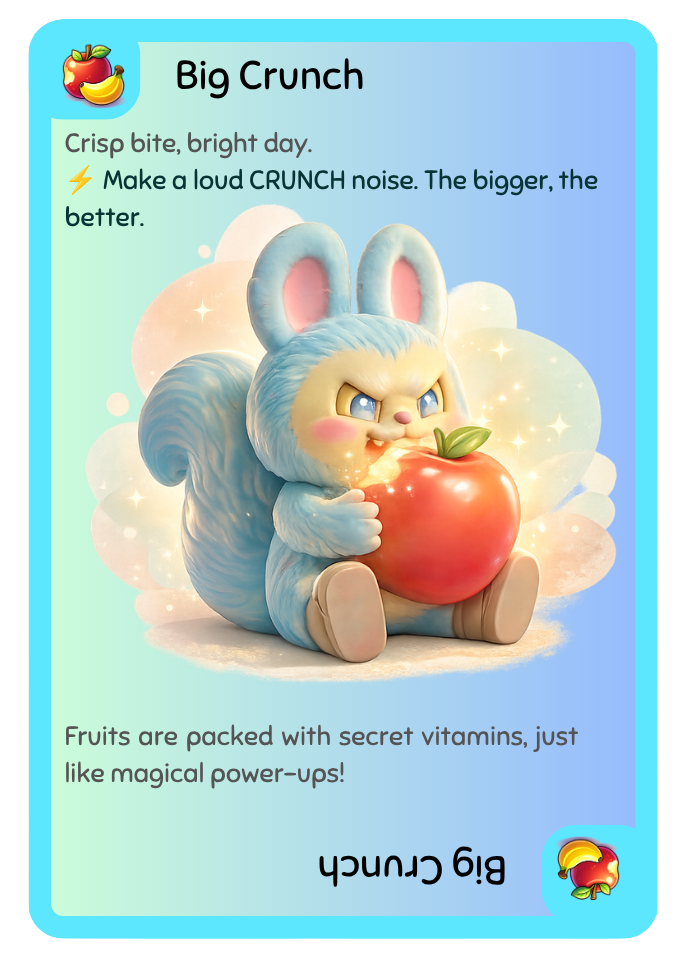
Taste is built, not born — one crunch, one sip, one swap, repeated until it's just what they reach for. A child often needs ten or more relaxed tries before a new food feels normal.
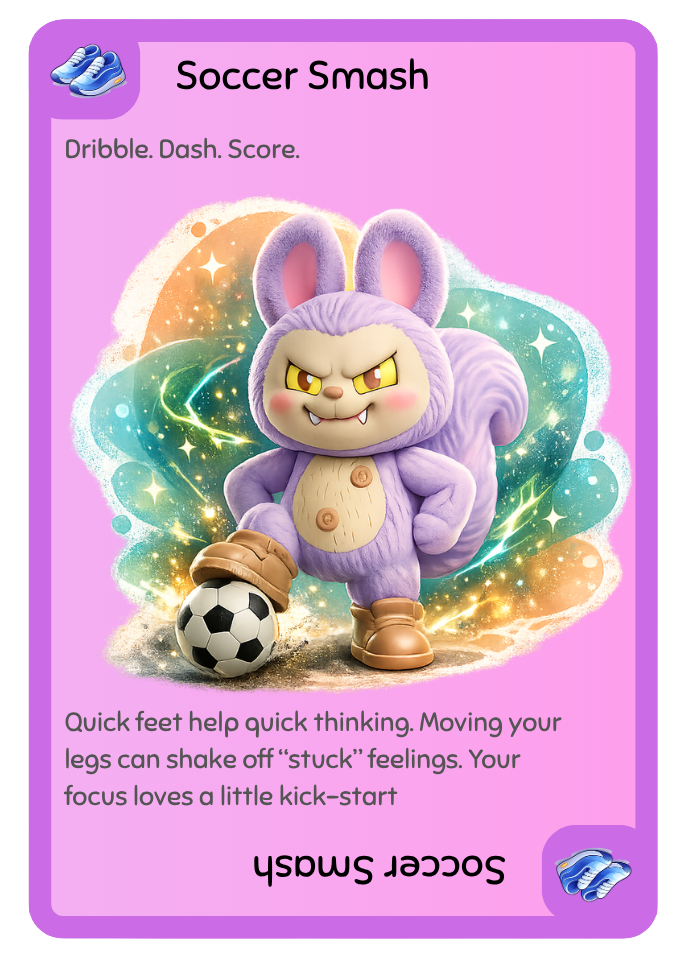
Flex, hop, wiggle, breathe — short bursts of movement dropped into play instead of saved for the gym. Even seconds of activity measurably lift a child's attention and mood.
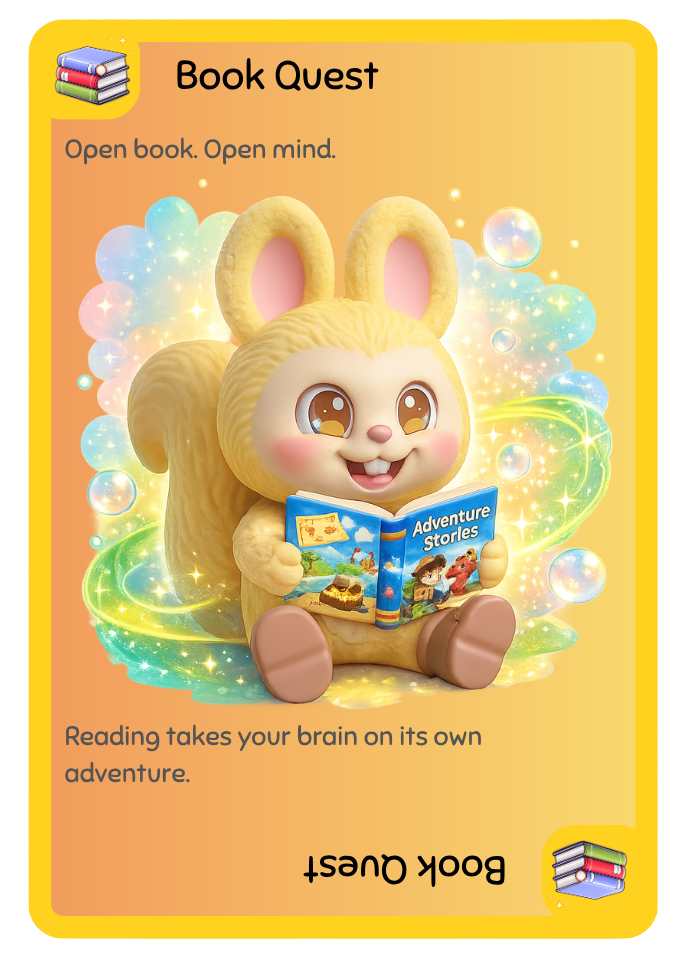
Curiosity, focus, and sticking with hard things. When a child chooses to engage, focus and follow-through build faster than when they're coaxed — so the game runs on their choice.
Take the healthy-habit theme away and there's still a sharp little strategy game here — which is why the whole table plays for real, not just the youngest person at it.
Which Grump to chase, what to hold back for the race to four trophies. Targeting and sequencing — the planning behind getting-ready-for-school skills.
Track the Zone, read each Grump's weakness colors, beat everyone to the slap on the NOOOO race. Working memory and attention, under friendly pressure.
A Boss Grump's Howl can reshuffle the board in one move. Knowing when to push is real decision-making — flexible thinking and impulse control in disguise.
Together that's executive function — the plan-and-self-control system that, in childhood, predicts school success better than IQ. Kids build it here without noticing, and so does everyone playing with them.
Kids become what they repeat, not what they're told. A card game is spaced repetition wearing a party hat — the same habits, again and again, never as a lesson.
Slapping, shouting, and acting it out stick deeper than reading a rule. The NOOOO race and the bonus moves are how a habit gets wired in.
Reward charts work until the rewards stop. A game kids ask to replay brings its own motivation — and that's the kind that lasts.
A tablet rewards staring. This rewards looking up — faces, turns, and getting yourself back together after a loud round. Fifteen minutes at a table beats forty-five of scrolling.
Sticker charts quit the moment the stickers stop. This keeps going because kids want to play it on their own — the game is the reward.
Most are a theme and not much underneath. Same easy fun here, plus four pillars of real habits and a strategy layer doing the quiet work.
Edutainment is a quiz in a costume, and kids see through it fast. Here the lesson stays invisible — the game comes first, the learning rides along under it.
Become an Early Supporter